Travel · 7 min read
Where to Stay in Saint-Tropez: A Guide to the Villa Zones
Les Parcs, Cap Camarat, Ramatuelle, the village or the countryside? How we actually talk clients through choosing the right zone for a villa in Saint-Tropez.
Most clients arrive at Saint-Tropez having already decided on the town. The harder question — the one that actually shapes the stay — is which part of it.
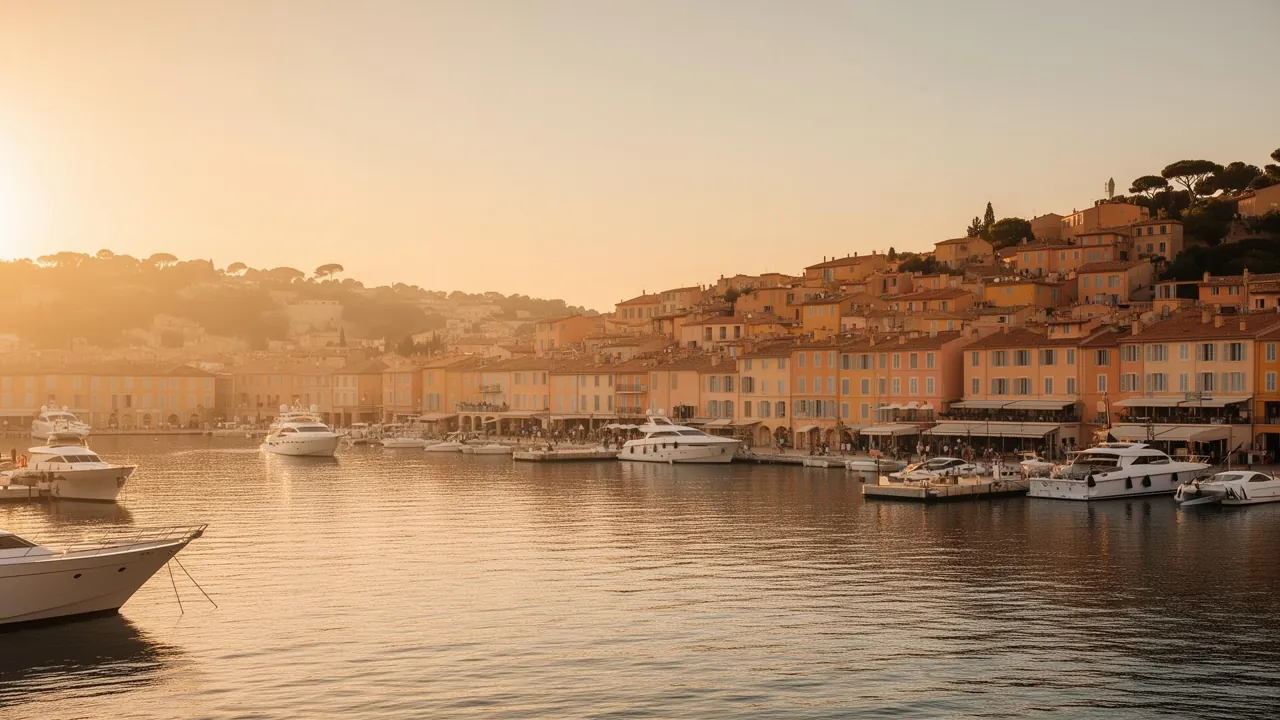
Saint-Tropez is small. You can drive from the old port to the far end of Pampelonne in twenty minutes, traffic permitting, and in August traffic rarely permits. But within that small radius are five or six distinct characters of place, and the difference between them is the difference between two entirely different holidays. A villa in Les Parcs and a villa in the village are roughly the same price and ten minutes apart, and a client who would love one would be quietly miserable in the other.
What follows is how we actually talk our clients through it.
Les Parcs de Saint-Tropez
If discretion is the priority, the conversation usually starts and ends here. Les Parcs is a private, gated domain on the peninsula between the town and the sea — a few hundred properties behind a single controlled entrance, with its own security and a near-total absence of through traffic. It is where a great deal of old and new money in Saint-Tropez quietly lives.
The villas here tend to be substantial. Most were built between the 1970s and the 1990s and the better ones have been renovated to a contemporary standard while keeping their mature gardens — which is the thing money cannot rush. A large estate in Les Parcs with a pool, staff quarters and pine-shaded grounds is the archetype of a Saint-Tropez villa, and the pricing reflects it: properties in our own collection here run from around €42,000 per week in high season.
What you trade for the privacy is immediacy. You are not walking to the port for dinner; you are driving, or being driven. For families and for clients who want the villa itself to be the centre of the stay, that trade is usually worth making. Our properties in this zone include Villa Harmonie, an eight-bedroom estate on 6,000 sqm with a heated mirror pool, and Villa Sunset, a newly renovated residence with sea views and an 18-metre saltwater pool.
Pampelonne and the beach
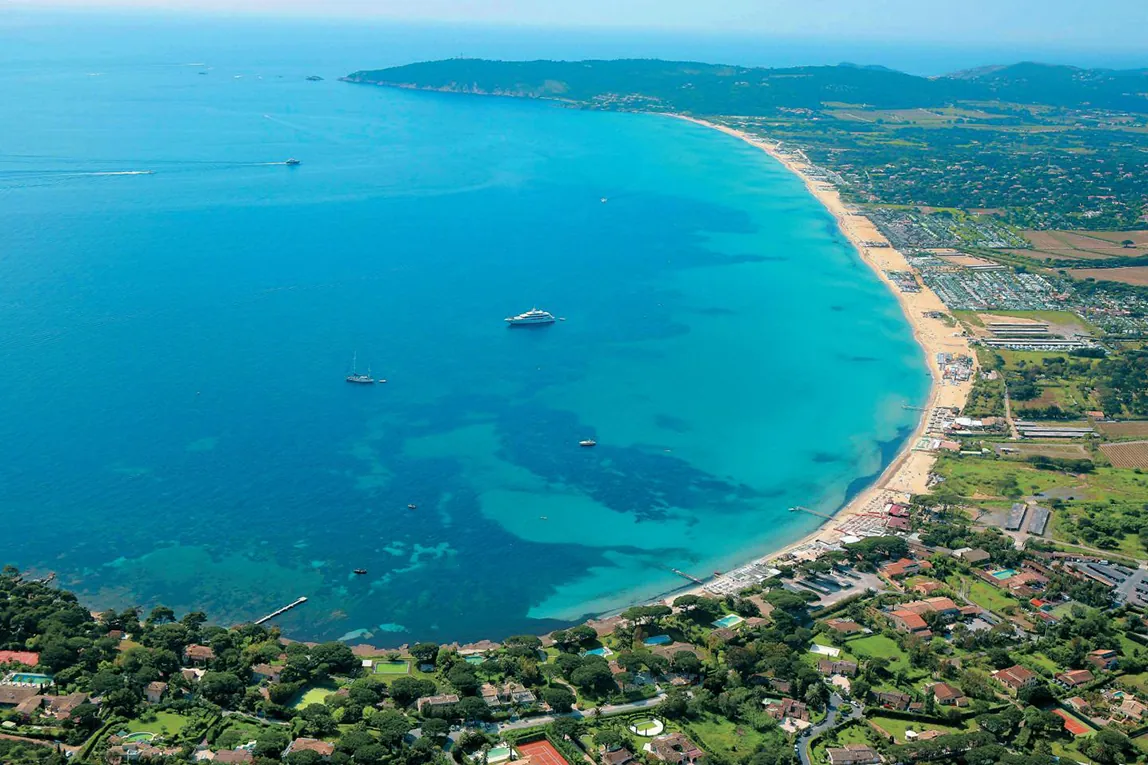
Pampelonne is the four-kilometre stretch of sand south of the town that most people actually picture when they picture Saint-Tropez. A villa here — particularly one with direct or near-direct beach access — is the most sought-after and the most seasonal thing we rent.
The appeal is obvious and worth stating plainly: you are a short walk from the beach clubs that define the European summer, and the evening light coming off the bay is genuinely different from anywhere else on the peninsula. The cost of that, beyond the rental figure, is that you are at the centre of the season. In July and August this is the busiest part of Saint-Tropez. Some clients find that electric; others find it exhausting by the second week.
Our beach properties begin with Villa Tahiti Beach, a short walk from Tahiti Beach itself, from around €22,000 per week. They rise to Villa Bagatelle, set within the private domain of La Capilla with its own buoy for boat access, and to Villa Bliss, an estate with direct sea access, 5,000 m² of grounds and a sixteen-metre heated pool, at the very top of the range. We cover the beach clubs themselves in more detail in our insider's guide to Pampelonne.
Cap Camarat and Ramatuelle
For clients who want the sea without the crowd, the conversation moves up the hill. Cap Camarat is the headland east of Pampelonne; Ramatuelle is the hilltop village above it. Both trade the immediacy of the beach for elevation, panoramic views over the gulf, and a great deal more quiet.
The properties here are often larger and sit on more land than what you find closer to town — there was simply more space to build when many of them went up. They suit clients who are happy to make the villa and its terrace the gravitational centre of the day, with the beach as a deliberate outing rather than a doorstep. Villa Pinède, set among vineyards and umbrella pines in the sought-after area of Ramatuelle on nearly a hectare of grounds, is characteristic of this zone. Expect to drive for dinner; expect, in return, to hear nothing at night but cicadas.
The village and the old town
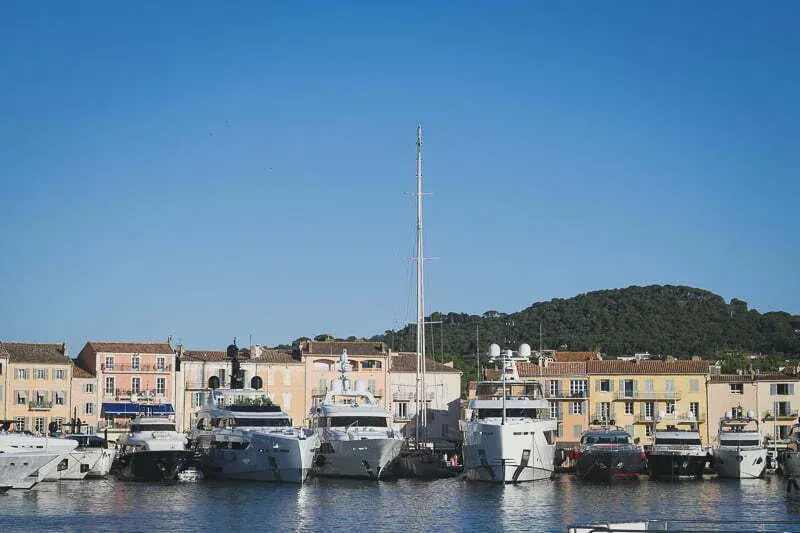
A small number of properties sit close enough to walk to Place des Lices and the port. These are the rarest of the categories, because there is very little land in the town itself, and they suit a specific kind of client: the one who wants to be inside the rhythm of Saint-Tropez rather than arriving into it by car each evening.
The appeal is the morning market, the dawn quiet on the ramparts before the day-trippers arrive, dinner without a designated driver. The compromise is space — town properties are generally smaller and have less private outdoor ground than their counterparts on the peninsula. Villa Sea Via, steps from Place des Lices, and Villa Ponche, a renovated fisherman's house in the historic enclave of La Ponche, sit in this category. For couples and smaller groups who came for the town and not the beach, nothing else compares.
The countryside — Gassin and the hinterland
The least obvious choice, and for the right client the best one. Inland from the coast, around the perched village of Gassin and through the vineyards toward La Môle, are properties that offer a completely different register of the same destination: stone, olive groves, vineyard light, and silence.
This is not for the client who wants to be at Club 55 by noon. It is for the one who has done that, several seasons running, and now wants Saint-Tropez at arm's length — close enough to go in for an evening, far enough to forget it exists by mid-morning. Villa Champêtre, set among vineyards and olive groves, is our property in this register.
So which one?
If we had to compress fifteen years of this conversation into a single line: choose Les Parcs for privacy, Pampelonne for the beach and the season, Cap Camarat or Ramatuelle for the view and the quiet, the village for the town itself, and the countryside for the year you want all of it to slow down.
The right answer changes with who is travelling, what month it is, and how many seasons of Saint-Tropez you already have behind you. That last part is usually the most telling, and it is the part a brochure can't account for. It is also, in the end, what we are for.