Lifestyle · 8 min read
What to Expect: A Week in a Saint-Tropez Villa
From arrival day to checkout, an honest day-by-day account of what a week in a Saint-Tropez private villa actually looks like — for first-time villa renters.
# What to Expect: A Week in a Saint-Tropez Villa
Most people who rent a private villa in Saint-Tropez have stayed in hotels most of their lives. The switch is not complicated — but it is different, and understanding how it works before you arrive removes most of the uncertainty that first-time renters carry with them.
This is a week as it typically goes. Not a marketing version. An honest one.
Before You Arrive
The week begins before the plane lands. If you are working with the right company, you will have been in contact with someone who knows your property well — not a booking confirmation and a key code, but a person who can answer specific questions about the villa, the neighbourhood, and what to organise in advance.
At a minimum, sort out: how you are getting from Nice or Toulon airport to the villa (the drive is 1.5 to 2 hours and transfers are worth pre-arranging), whether you want a grocery delivery to meet you on arrival, and any restaurant reservations you care about. July and August bookings at the better addresses fill weeks ahead. September is more forgiving.
The most common arrival-day regret is not having provisioned the villa in advance. Arriving at 6pm to an empty fridge, with children who have been travelling for eight hours, is solvable — there are late-opening shops — but it sets a tone. Provisioning in advance costs the same and starts the week differently.
Day One: Arrival
The villa will have been cleaned and prepared. Someone will be there to hand over the keys, walk you through the systems — pool temperature, air conditioning, the WiFi, the gate code — and answer whatever you need to know. This handover typically takes twenty to thirty minutes.
Then the villa is yours.
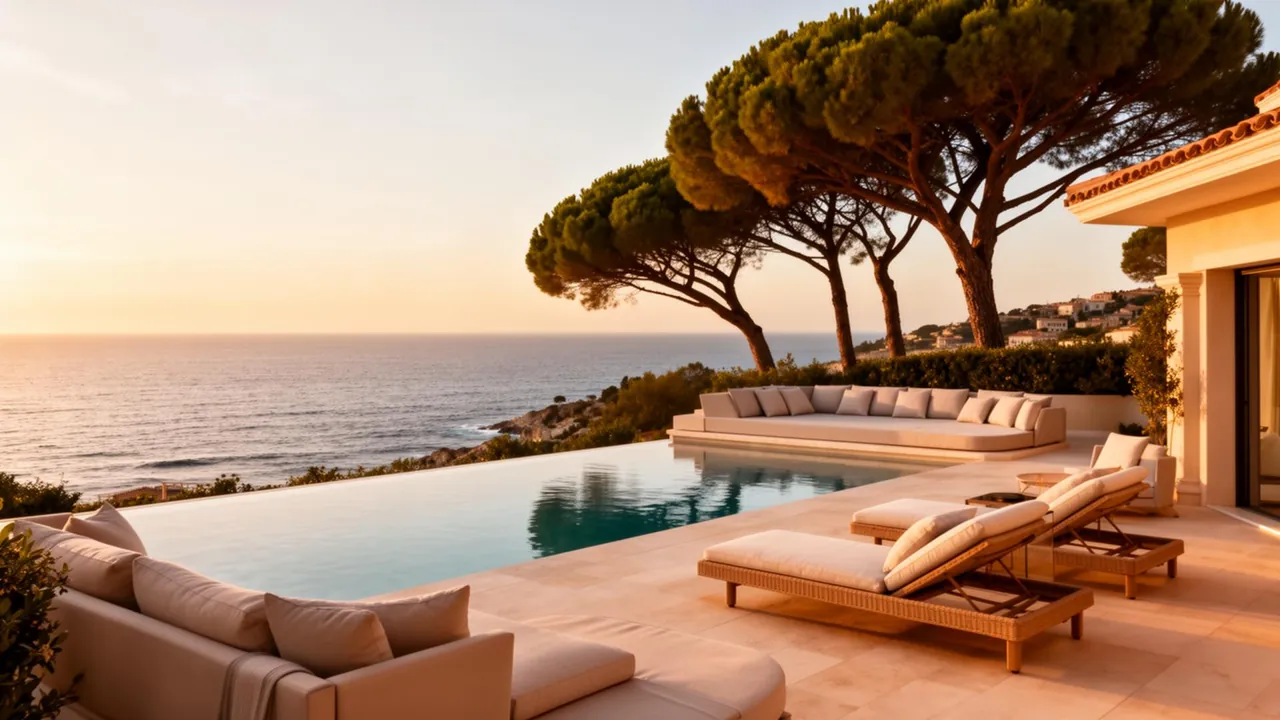
Most groups spend the first afternoon doing very little: exploring the space, claiming bedrooms, sitting on the terrace. The villa is usually better than the photos — photographs are static and cannot capture the quality of light in the south of France in the late afternoon, or the temperature differential between the terrace and the pool.
Dinner on the first night is almost always at the villa. You have been travelling. The fridge is stocked. The terrace is private and quiet. The correct decision, almost every time, is to stay in.
Days Two and Three: Finding Your Rhythm
By the second morning, the group has usually organised itself. There is a natural division between those who want to be on the beach by ten and those who want to read until noon, and a private villa accommodates both without negotiation.
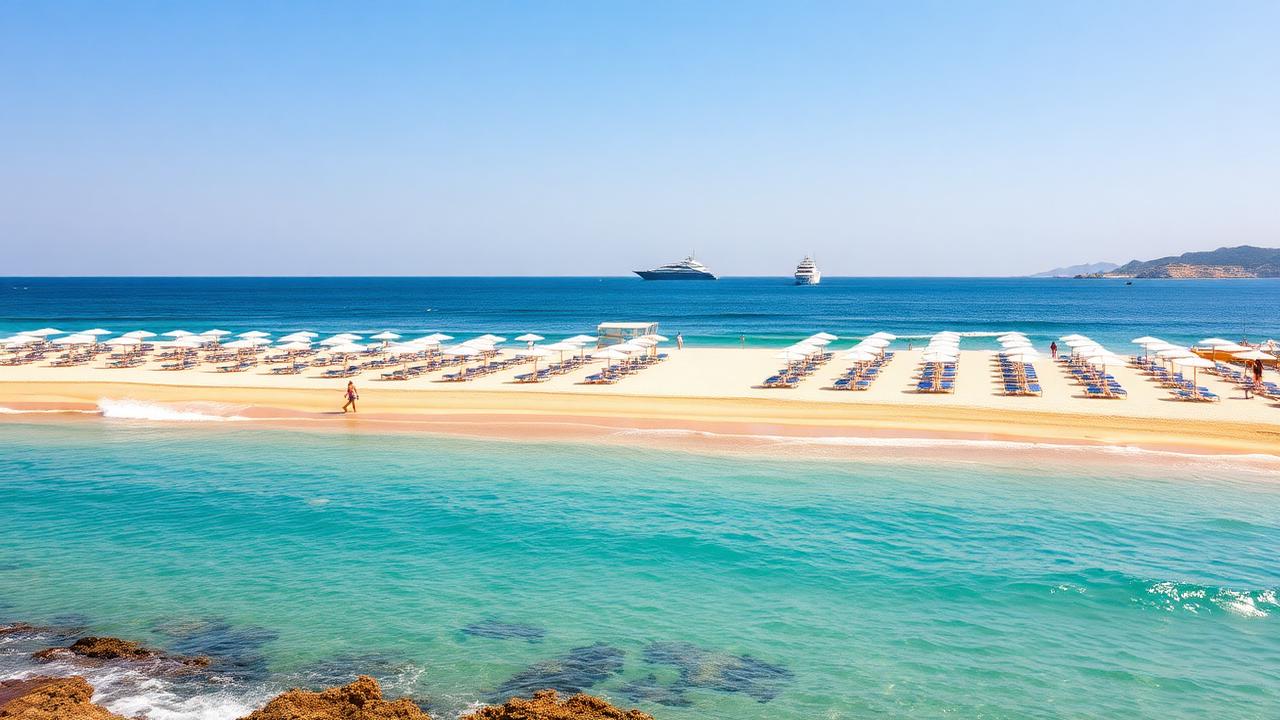
Pampelonne is the reference beach for most visitors — four kilometres of coastline, mostly private clubs, almost entirely sand. The clubs vary considerably in character: Nikki Beach draws a younger, more visible crowd; Club 55 is old money and lunch that lasts until four; Tahiti is accessible without a reservation and has the best stretch of open sand. Most villa stays include at least two or three beach days, with the villa as the base for mornings and evenings.
The town itself — the port, Place des Lices, the Annonciade — warrants half a day. The market on Tuesday and Saturday mornings is genuinely worth setting an alarm for. The port in the evening, with a drink at Senequier, is as reliably pleasant as it has been for sixty years.
Days Four and Five: The Deeper Saint-Tropez
By mid-week, the group has usually exhausted the obvious itinerary and found its own shape. Some days this means a boat — day charters out of the port are easy to arrange and give you a different version of the coast entirely, with access to coves and anchorages that are unreachable by road. Some days it means almost nothing: late breakfast, the pool, a long lunch prepared at the villa.
The villages inland are underused by most visitors. Ramatuelle is fifteen minutes from the coast and looks exactly as it did in the 1960s. Gassin, a few minutes further, has a restaurant with arguably the best view in the region. Grimaud and Cogolin are worth an afternoon if the coast begins to feel repetitive.
By this point, the villa has usually stopped being accommodation and become home in the way that holidays occasionally manage. The pool is at the right temperature. You know which supermarket has the better fish. You have a preferred table at a beach club. The machinery of the trip is no longer visible.
Days Six and Seven: The Last Stretch
The last two days are often the best. The group is settled. There is no itinerary pressure. The instinct is usually to slow down — longer mornings, a final dinner somewhere that deserves a proper reservation, an evening at the villa that nobody is in a hurry to end.
Checkout is typically by ten or eleven in the morning. The cleaning team arrives, the deposit is returned, and the handover takes about fifteen minutes. The drive back to the airport often feels longer than the one arriving.
What Surprises First-Time Villa Renters
Several things catch people off-guard, all of them positively.
The privacy is more complete than expected. A hotel, even a very good one, involves other guests, corridors, and the ambient awareness that you are in a shared space. A private villa is simply yours. The pool is yours. The terrace is yours. You can eat breakfast in whatever state you choose.
The group dynamic changes. Something about shared domestic space — cooking together, eating together, the natural gathering that happens around a kitchen — produces a different quality of time than a group in adjacent hotel rooms.
The cost per person often compares favourably to the alternative. Once you divide a villa across twelve people, the economics shift in ways that are not obvious until you do the arithmetic.
What to Know Before You Go
A few practical notes that make a meaningful difference.
Rent a car, or two. Saint-Tropez is not walkable from most villa locations, and the bus service is not designed for a group with luggage and beach equipment. Cars are inexpensive relative to the overall cost of the trip.
Book restaurants early. The best tables in July and August fill two to four weeks ahead. If there is a specific restaurant you want, it is worth making a reservation before you arrive.
The September case. If you have flexibility, September deserves serious consideration. The sea is at its warmest. The crowds are substantially thinner. Restaurants are easier. The light is different — lower and more golden. Many people who have been in August and September say September is objectively better. The price differential is real.
Ask your rental company for introductions. The best-connected companies have relationships with the people who run the beach clubs, the yacht charters, the private dining options, and the restaurants that don't advertise. These introductions are part of what you are paying for. Ask for them.
*If you have specific questions about what a week actually looks like at a particular villa, or what to prioritise for your group, we are happy to talk it through before you commit to anything.*